


Lease End Pros & Cons
Pros
- Specializes specifically in auto lease buyouts
- Lets drivers buy out a leased vehicle without going through a dealership
- Helps compare financing options through lender partners
- Handles much of the paperwork, including title transfer and registration
- Digital process with secure e-signing
- Expert advisors available to guide borrowers through the process
- Works with all major manufacturers in all 50 states
- Lease End says its service is free for drivers, with no doc, admin, or convenience fee
- May help drivers avoid mileage penalties, disposition fees, or wear-and-tear charges by keeping the vehicle
- Strong Trustpilot rating and BBB accreditation
Cons
- Not a direct lender funding the loan itself
- Focused on lease buyouts, not standard new or used car purchase loans
- Final APR, monthly payment, term, and approval depend on the lender
- Applying for financing involves a hard credit inquiry
- Multiple lenders may review an application, which can result in multiple credit inquiries appearing on a credit report
- Taxes, registration, title, loan interest, and optional coverage costs still apply
- Lease buyouts may not make financial sense if the vehicle’s buyout price is higher than its market value
- Optional products such as GAP or vehicle service contracts may increase the total financed amount
- Some borrowers may prefer working directly with their bank, credit union, or leasing company
Lease End at a Glance
Suggested editorial score: 8.9/10
Lease Buyout Experience — 9.5/10
Lease End is highly specialized in lease buyouts. Unlike broader auto loan marketplaces, it focuses almost entirely on helping drivers purchase the vehicle they already lease.
Online Experience — 9.2/10
The platform supports an online process that includes entering a VIN or license plate, reviewing financing options, signing documents digitally, and letting Lease End coordinate title and registration steps.
Advisor Support — 9.1/10
Lease End provides access to buyout advisors who can help explain options, answer questions, and guide users through a process that can otherwise feel confusing.
Loan Variety — 7.7/10
Lease End is very strong for lease buyout financing, but it is not as broad as platforms that also offer new car loans, used car loans, private-party loans, standard refinancing, and motorcycle loans.
Transparency — 8.6/10
Lease End explains its process clearly and says it does not charge drivers doc, admin, or convenience fees. However, borrowers still need to review final lender terms, taxes, registration fees, optional coverage, and the total buyout cost.
Customer Reputation — 9.0/10
Lease End has a strong Trustpilot profile, with a 4.8 out of 5 TrustScore based on more than 2,000 reviews at the time reviewed. BBB also lists Lease End as accredited with an A+ rating.
Overview
Lease End is built around one main use case: helping drivers buy the car they are already leasing. A lease buyout lets a driver purchase the vehicle for the predetermined residual value listed in the lease agreement, plus taxes, registration, fees, remaining payments if applicable, and financing costs. Lease End’s role is to make that transaction easier by helping users find financing and complete the paperwork online.
This makes Lease End different from general auto loan marketplaces. Platforms like LendingTree or myAutoloan help borrowers compare several types of auto financing, while Lease End focuses on a narrower problem: what to do when a lease is ending and the driver wants to keep the car.
The service may be especially helpful because lease buyouts can involve several parties, including the leasing company, a lender, state DMV offices, title agencies, and the borrower’s insurance provider. Lease End says it helps with lender coordination, payoff, titling, registration, and new plates, allowing borrowers to avoid many of the offline steps usually associated with a lease buyout.
Lease End also positions itself as a way to avoid dealership friction. Instead of returning to a dealer to discuss lease-end options, the borrower can start online, review buyout financing, sign documents, and let Lease End coordinate the rest of the process.
Who Is Lease End Best For?
Lease End is best for drivers who are nearing the end of a lease and want to keep their current vehicle. It can be a strong fit for borrowers who like their car, want to avoid mileage overage charges, want to avoid wear-and-tear penalties, or believe their vehicle is worth more than the lease buyout amount.
It may also be useful for drivers who want to skip the dealership. Lease-end decisions can involve pressure to return the vehicle, lease another car, or accept dealership-arranged financing. Lease End gives borrowers a way to explore buyout financing without relying only on the dealership’s process.
Lease End may also be attractive for borrowers who want help with paperwork. The company says it handles title transfer, vehicle registration, and lender coordination, which can save time for users who do not want to manage those steps themselves.
Lease End may not be the best choice for shoppers who want to buy a different car. It is not a broad vehicle purchase marketplace. It is also not ideal for borrowers who want a standard refinance of an existing auto loan, motorcycle financing, or private-party purchase financing.
It may also not be the best fit if the buyout does not make financial sense. If the residual value and required taxes or fees are higher than the vehicle’s market value, returning the vehicle or shopping for another car could be a better option.
Key Lease End Features
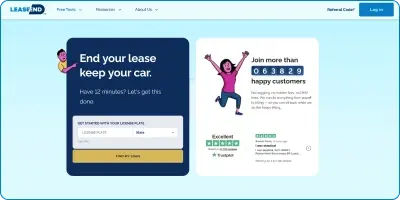
Lease End’s main feature is online lease buyout support. Users can start with a VIN or license plate, provide lease and personal details, review financing and coverage options, sign documents, and allow Lease End to handle many of the final steps.
Another key feature is lender shopping. Lease End says it shops a user’s deal across lender partners to help find financing for the lease buyout. Its lender network includes major banks and financial institutions, and the lender that approves the loan provides the funds used to purchase the vehicle from the leasing company.
Lease End also emphasizes convenience. The company says users can complete the application in about 12 minutes, e-sign documents through their Lease End account, and avoid visiting a dealership, bank, or DMV office.
The platform also helps with title and registration. After documents are signed, Lease End says it coordinates directly with the leasing company and lender to complete payoff, title transfer, registration, and plates.
Lease End also provides educational tools and content. Its website includes lease buyout guides, calculators, credit resources, and articles explaining how buyout costs, residual value, APR, taxes, and registration fees affect the final decision.
Another useful feature is that Lease End says its service is free for drivers. According to the company, it does not charge doc fees, admin fees, or convenience fees, and instead earns money from lenders when a customer completes a lease buyout loan through a partner.
Application Process
The Lease End process starts online. Borrowers can begin by entering their license plate or VIN, then answering questions about themselves, their lease, and the vehicle. Lease End uses this information to help prepare a buyout estimate and financing options.
A typical process may look like this:
- Enter your license plate or VIN.
- Provide basic personal, lease, vehicle, and financial information.
- Review your buyout amount and financing options.
- Compare loan terms, monthly payment, APR, and optional coverage products.
- Choose the loan option that best fits your needs.
- Sign the required documents digitally through your Lease End account.
- Lease End coordinates with the leasing company and lender.
- The lender funds the buyout and pays off the leasing company.
- Lease End helps manage title transfer, registration, and plates.
- You begin making payments to the lender that funded the buyout loan.
Lease End describes its process in four main steps: tell the company about your car, review loan and coverage options, sign documents, and let Lease End arrange titling, registration, and new plates.
Borrowers should understand that applying for a lease buyout loan through Lease End can involve a hard credit inquiry. Lease End says it shops the deal to multiple lenders, and that multiple auto-loan inquiries within a short window are typically treated as one inquiry for scoring purposes, though the inquiries may still appear separately on a credit report.
Loan Types and Terms
Lease End mainly supports one loan type: lease buyout financing. This is financing used to purchase a vehicle that the borrower is currently leasing.
A lease buyout can make sense when the borrower likes the vehicle, wants to avoid lease return fees, has exceeded mileage limits, wants to stop leasing, or believes the car’s market value is higher than the buyout price. Lease End also notes that a buyout may not make sense if the car’s buyout price is higher than its current market value or if the borrower does not want to own the vehicle long term.
The total lease buyout cost may include the vehicle’s residual value, remaining payments if applicable, taxes, registration costs, title fees, loan interest, and optional products such as GAP or vehicle service coverage. Lease End’s rate guide says the full cost can include payoff amount, sales tax, registration fees, loan interest, and optional coverage.
At the time reviewed, Lease End’s published lease buyout rate guide listed a 2026 average APR of 9.13% across credit profiles, with average APRs varying by credit tier. The same guide listed average APRs of 6.22% for scores above 800, 6.66% for 740–799, 8.12% for 670–739, 11.28% for 580–669, and 15.56% for scores below 580. These are Lease End’s own published averages and should not be treated as guaranteed rates.
Lease End says it works with lenders who serve drivers down to a credit score of 520, but rates depend heavily on credit profile. Borrowers with stronger credit are more likely to qualify for competitive APRs, while borrowers with lower credit scores may still have options but should compare the full cost carefully before committing.
Is Lease End Safe?
Lease End appears to be a legitimate lease buyout platform with a strong public reputation. The company says it uses bank-level encryption, secure data practices, limited data access, and verified lending partners to protect borrower information during the lease buyout process.
The company’s privacy policy states that financial information may be collected when users apply for financing or purchase services online, including name, address, driver’s license information, Social Security number, and credit information. Lease End says this information is placed in a secure database and used to provide the service requested.
Lease End also states that it does not sell personal information to advertisers or data brokers and that personal and financial information is used to process the lease buyout application and connect users with lenders.
That said, borrowers should understand that Lease End is a marketplace-style platform. When you apply, your information may be shared with lender partners for underwriting and loan decisioning. Borrowers should also be aware that hard credit inquiries may occur when applying for financing.
As with any auto finance transaction, the safest approach is to review all final documents before signing. Pay close attention to the APR, loan term, monthly payment, total repayment cost, taxes, registration costs, optional coverage, and whether the buyout price makes sense compared with the vehicle’s market value.
Repayment Options
Repayment is handled by the lender that funds the lease buyout loan, not by Lease End itself. Once the buyout is completed, the borrower makes monthly payments to the lender according to the final loan agreement.
Before signing, borrowers should confirm the first payment due date, monthly payment amount, available payment methods, autopay options, late payment rules, payoff instructions, and whether prepayment penalties apply.
Borrowers should also remember that the lease buyout loan replaces the lease relationship. After the buyout is finalized, the vehicle is no longer being leased; it becomes financed through an auto loan. That means the borrower is now responsible for the loan balance, ongoing insurance, maintenance, registration, and eventual resale or trade-in decisions.
For lease buyouts, timing matters. Borrowers should keep making required lease payments until the buyout is fully processed and the leasing company confirms payoff. Missing a payment before the lease is officially paid off could create late fees or credit issues.
Customer Reviews and Reputation
Lease End has a strong Trustpilot profile. At the time reviewed, Trustpilot lists Lease End with a 4.8 out of 5 TrustScore based on 2,081 reviews. Trustpilot also shows 93% of reviews as 5-star reviews and 4% as 1-star reviews.
Positive customer feedback often mentions helpful staff, a simple process, clear explanations, fast service, and the convenience of completing a lease buyout without dealership involvement. Trustpilot’s review summary says customers frequently describe staff as helpful, professional, and knowledgeable.
Negative feedback tends to focus on issues such as communication after the transaction, pressure around additional services, dissatisfaction with final rates, credit inquiry concerns, or delays related to payoff and title processing. These types of complaints are common in lease buyout transactions because several parties can be involved, including Lease End, the lender, the leasing company, and state DMV offices.
The Better Business Bureau lists Lease End as BBB accredited with an A+ rating. BBB also states that Lease End has been accredited since December 3, 2018, and describes the business as offering vehicle leasing services, including termination and refinancing for clients nearing a lease-maturity deadline.
Overall, Lease End has a strong reputation for a specialized lease buyout platform. Borrowers who value convenience and support may find it very helpful, while users who want to compare every possible bank or avoid marketplace-style credit shopping may prefer to apply directly with their own lender.
Help and Support
Lease End provides phone support and online resources for drivers who have questions about lease buyouts. The company lists its main phone number as 844-902-2842 and encourages users to contact its advisors for lease-end questions.
The website also includes a login portal, FAQ section, lease buyout calculator, blog resources, and educational content about lease buyout financing, credit, paperwork, rates, and end-of-lease options.
Lease End’s contact page lists titling department hours as Monday through Friday from 7:00 a.m. to 4:00 p.m., with Saturday and Sunday closed.
Once the loan is funded, payment-related questions should be directed to the lender that services the loan. This includes billing, monthly payments, payoff requests, account access, and loan servicing questions.
How Lease End Compares
Lease End
Best for drivers who want to buy out their leased vehicle and keep the same car. Lease End is especially useful for borrowers who want an online process, lender shopping, document support, title transfer help, and dealership-free convenience.
Auto Approve
Best for borrowers who want auto refinancing or lease buyout financing with loan consultant support. Auto Approve is broader for refinancing existing auto loans, while Lease End is more specialized in lease buyouts.
Tresl
Best for borrowers who want advisor-supported auto refinance, lease buyout, or company car purchase financing. Tresl and Lease End both offer guided support, but Lease End is more narrowly focused on helping drivers purchase their leased vehicle.
RefiJet
Best for borrowers who want to refinance an existing auto loan or complete a lease buyout with representative support. RefiJet is more refinance-focused, while Lease End is more lease-buyout-focused.
Caribou
Best for borrowers who want to refinance an existing auto loan online. Caribou does not currently focus on lease buyouts in the same way Lease End does, making Lease End the more relevant choice for drivers who want to keep a leased car.
myAutoloan
Best for borrowers who want to compare several auto loan types, including new car loans, used car loans, refinancing, private-party loans, and lease buyouts. myAutoloan is broader, while Lease End is more specialized and hands-on for lease buyouts.
Auto Credit Express
Best for borrowers with bad credit, no credit, bankruptcy, or previous loan rejections who need help finding purchase financing through a dealer network. Auto Credit Express is more focused on credit-challenged car buying, while Lease End focuses on keeping a leased vehicle.
Dealership Lease Buyout
Best for drivers who prefer handling the buyout directly through a dealership. This can be convenient, but it may involve dealership fees, in-person paperwork, and potential upsells. Lease End may be better for borrowers who want to avoid the dealership process.
Overall, Lease End’s biggest advantage is specialization. It is built specifically around lease buyouts, which makes it more focused than most general auto loan marketplaces. Its main limitation is that it is not designed for every auto financing need.
Final Verdict
Lease End is a strong option for drivers who want to buy out their leased car and avoid the traditional dealership process. Its online platform, lender network, advisor support, document handling, and title coordination can make a complicated lease-end decision feel much easier.
The platform is especially useful for drivers who love their current car, want to avoid mileage or wear-and-tear penalties, or believe their vehicle has positive equity. It may also be helpful for borrowers who want to compare lease buyout financing without applying separately with several banks.
That said, Lease End is not a direct lender. Final approval, APR, monthly payment, loan term, and repayment experience depend on the lender that funds the buyout loan. Borrowers should also compare the total buyout cost against the vehicle’s market value before moving forward.
Bottom line: Lease End is worth considering if your lease is ending and you want to keep your car. It is best used as a specialized lease buyout platform, not as a general car loan marketplace or direct lender.
Physical Address
Lease End, LLC
411 Overland Ave.
Burley, ID 83318
United States
Additional BBB-listed location:
1096 E Main St.
Burley, ID 83318
United States
Phone: 844-902-2842
Email: hello@leaseend.com